UK Kitchen Wrapping vs. American Cabinet Remodeling
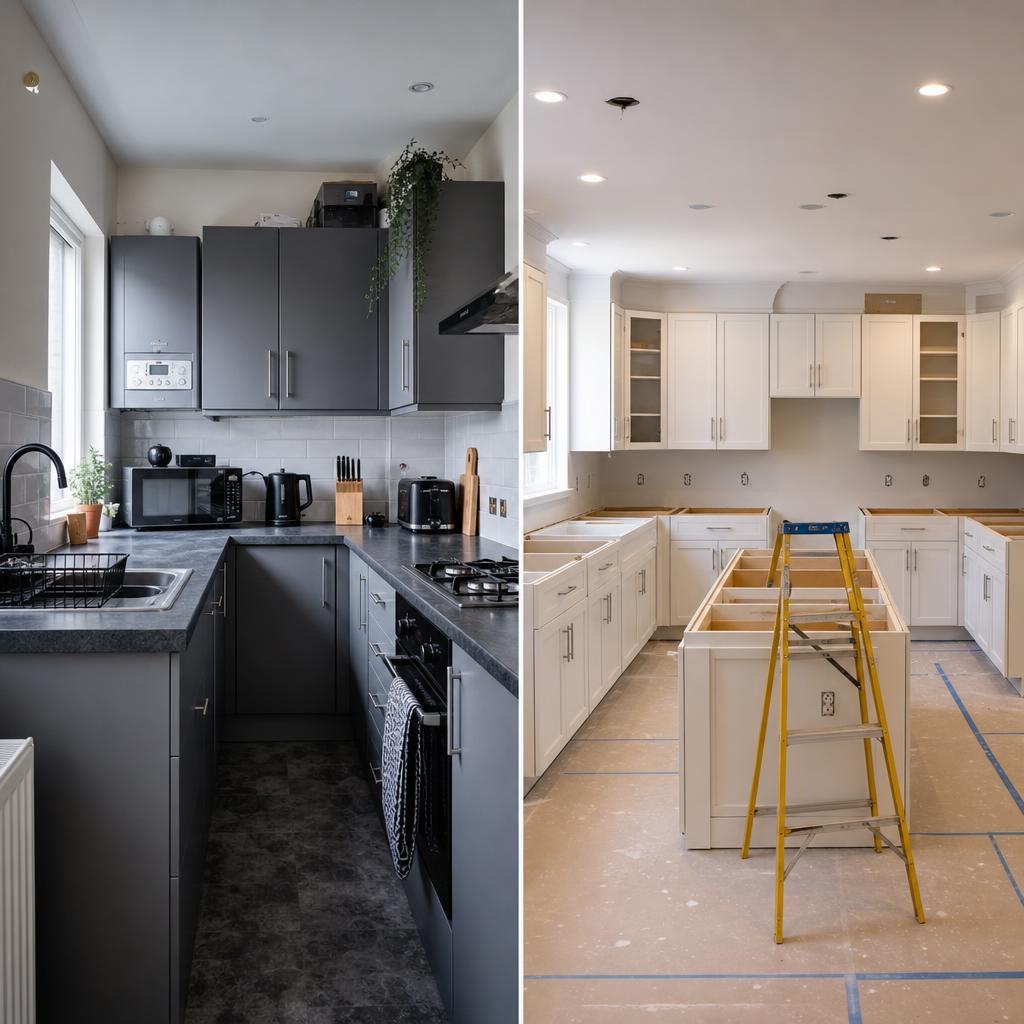
TL;DR: British kitchen wrapping and American cabinet remodeling differ in both words and methods. Here is a plain comparison of the main options.
People searching for kitchen ideas often run into a mix of British and American terms, and a mix of methods that sound similar but are not. British content talks about "wrapping cupboards and worktops," while American content talks about "remodeling cabinets and countertops." This guide sorts out the vocabulary first, then compares the four common ways to update a kitchen: wrapping, painting, refacing, and replacement.
The Vocabulary Gap
The words trip people up more than the methods do. Here is the quick translation:
- Cupboards (UK) = cabinets (US) — the boxes and doors that store your dishes and food
- Worktops (UK) = countertops (US) — the work surfaces on top of the base cabinets
- Kitchen wrapping (UK) = cabinet wrapping (US) — applying architectural film over existing surfaces
- Kitchen fitter (UK) = kitchen installer or contractor (US) — the trade that does the work
Once you set the words aside, wrapping is the same idea in both countries: cover the surfaces you already have with a durable film instead of tearing them out.
Method 1: Wrapping
Wrapping applies architectural film, such as Bodaq, over your existing cabinet doors, drawer fronts, and exposed panels. The boxes stay in place. It is the least disruptive option, with no demolition and a short schedule. Many standard kitchens can be completed in approximately one day, and most projects take one to three days depending on size and prep.
Cabinet wrapping starts from $1,999 for a studio or small kitchen and runs up to about $3,500 for a large kitchen. Because it reuses your boxes, some customers may save approximately 60 to 80 percent compared with full replacement, depending on project scope. Wrapping is best for sound cabinets with dated finishes and a layout you are happy to keep. Learn more on our cabinet wrapping service page.
Method 2: Painting
Painting cabinets means sanding, priming, and applying several coats of paint, ideally sprayed for a smooth finish. It is a lower-material-cost option and lets you pick almost any color. The trade-offs are time and durability. A quality paint job takes days of prep and drying, and painted cabinets can chip or show brush marks at high-touch spots over time. Painting also cannot give you a wood grain or a stone-look; it is a solid color only.
Method 3: Refacing
Refacing replaces the doors and drawer fronts with new ones and covers the visible box faces with a matching veneer. You keep the cabinet boxes but get new fronts. It sits between wrapping and replacement on both cost and disruption. Refacing gives you brand-new doors, which can matter if your current doors are damaged, but it costs more than wrapping and takes longer because new components have to be ordered and installed.
Method 4: Replacement
Replacement is a full renovation: out with the old cabinets and counters, in with new ones. It is the only option that lets you change your layout, move the sink, or resize cabinets. It is also the most expensive and disruptive, often running $15,000 to $30,000 or more, with a timeline measured in weeks and, in apartment buildings, board approvals and alteration agreements. Replacement makes sense when the existing kitchen is failing or the layout truly needs to change.
A Side-by-Side Summary
- Wrapping — lowest disruption, days not weeks, keeps boxes and layout, wide range of textures
- Painting — solid colors only, lower material cost, longer prep, can wear at high-touch spots
- Refacing — new doors on old boxes, mid-range cost, longer lead time for components
- Replacement — highest cost and disruption, but the only way to change the layout
When Wrapping Is Not the Right Choice
Wrapping is not suitable for cabinets that are structurally failing, water-damaged, swollen, or delaminating. If your boxes are compromised, refacing or replacement is the honest answer, because film cannot restore structure. Raised-panel doors need an in-person evaluation before we can say they will wrap to our standard. And if you want to change the layout, only replacement can do that. We would rather point you to the right method than sell you the wrong one.
If you do wrap countertops, they need trivets under hot cookware, cutting boards instead of direct cutting, and no standing water. Countertop pricing varies by project. See our countertop wrapping service for details.
Frequently Asked Questions
Is wrapping cheaper than painting?
It depends on the project. Painting can have a lower material cost, but it takes more labor time for prep and drying and gives you solid colors only. Wrapping offers wood grains and stone-looks and a shorter schedule. Compare quotes for your specific kitchen.
Does refacing last longer than wrapping?
Refacing gives you new doors, which helps if the current ones are damaged. But quality architectural film on sound doors holds up well to daily use. If your doors are structurally fine and just dated, wrapping is often the better value.
Which method should I choose?
If your cabinets are sound and your layout works, wrapping is usually the fastest and least disruptive update. If the boxes are failing or you need a new layout, replacement is the honest path. Refacing and painting sit in between.
Want help comparing wrapping, painting, refacing, and replacement for your kitchen? Get an honest recommendation or call (646) 736-2976. You can also start a quick quote to see how wrapping fits your project.
Reviewed by the Cabinet Restore Pro team.
Get a Free Quote for Your Kitchen
Tell us what you want wrapped and we'll send you an estimate — no site visit needed.
Ready to Refresh Your Kitchen?
Get a free consultation and see how cabinet refinishing can transform your space — at a fraction of the cost of new cabinets. We offer remote consultations and ship free samples.