Two-Tone Cabinet Wrapping Ideas for NYC Apartments
TL;DR: Two-tone kitchens add depth without a renovation. Here are combinations that work in NYC apartments and how to place them in a small space.
A two-tone kitchen uses two finishes instead of one, and done well it adds depth and interest that a single color cannot. In a NYC apartment, where the kitchen is often part of the main living space, that little bit of contrast can make the room feel designed rather than default. Wrapping makes two-tone easy, because you can pair any two finishes without ordering custom cabinetry.
Here are combinations that hold up in real NYC kitchens, plus how to place them so a small space still feels open.
How Two-Tone Layouts Usually Work
There are a few standard ways to split the two finishes. The most common is lighter uppers with a deeper or warmer lower run. Another is a contrasting island or peninsula against neutral perimeter cabinets. A third is using one finish on a tall pantry wall as an accent. The rule of thumb in a small kitchen is to keep the lighter tone up high, which keeps the ceiling feeling tall.
Combinations Worth Considering
White and Oak
Warm white uppers with white oak lowers is a favorite for good reason. It stays bright while grounding the room with wood, and it suits both a modern condo and a prewar apartment. This is a safe, versatile starting point if you are new to two-tone.
Sage and Warm White
Sage lowers with warm white uppers adds a soft touch of color without darkening the room. It reads calm and current, and it is a smart way to bring sage into a small kitchen while keeping it feeling open.
Charcoal and Oak
Charcoal paired with white oak is more modern and higher contrast. Charcoal works best on lowers or an island rather than uppers, especially in a compact kitchen, so it grounds the space instead of closing it in. The oak keeps the charcoal from feeling heavy.
Walnut and Cream
Walnut with a cream finish is warm and refined, a strong fit for a condo that wants a dressier feel. The walnut brings richness while the cream keeps things soft. This pairing reads high-end without much effort.
Using the Island as an Accent
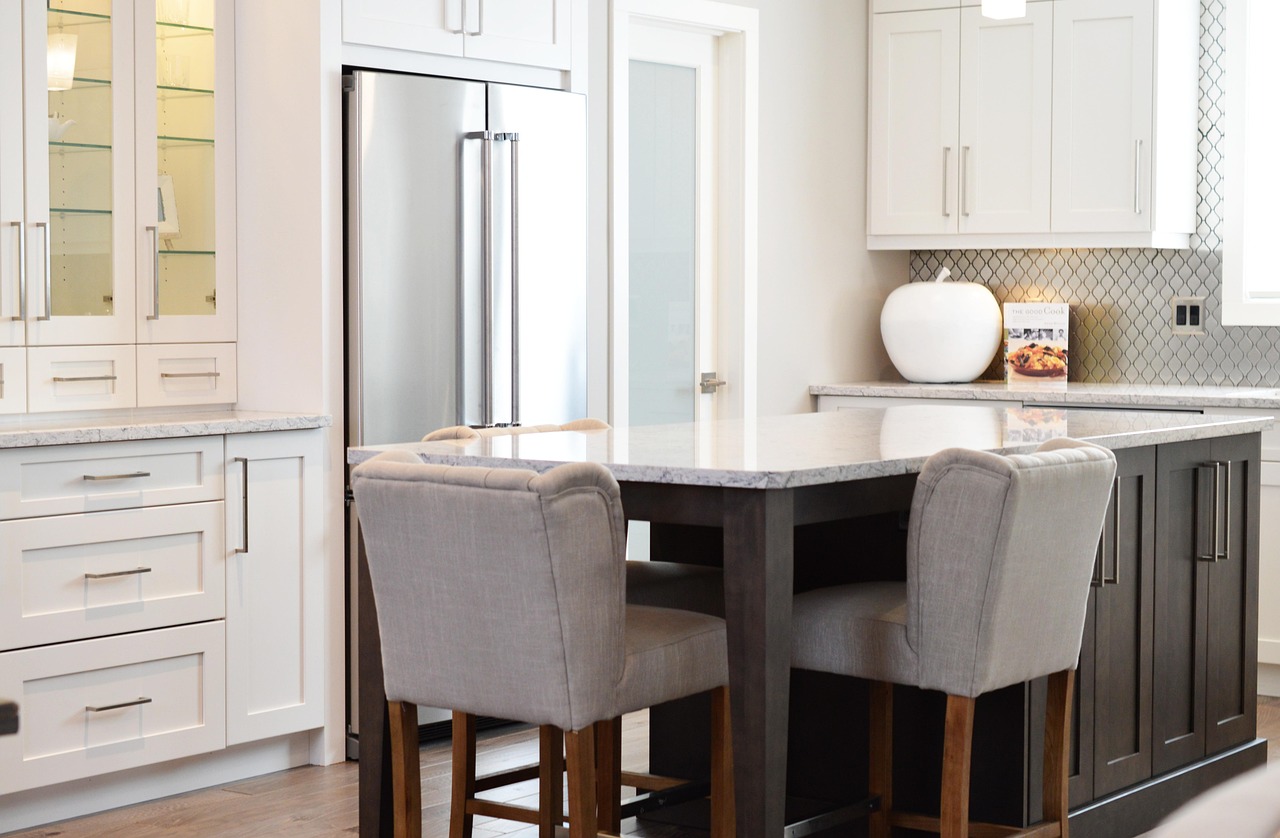
If your kitchen has an island or a peninsula, it is the natural place for the accent finish. A darker or warmer island against neutral perimeter cabinets creates a focal point without committing the whole room to a bold color. This approach is popular in open-concept condos where the island faces the living area. In a galley with no island, a tall pantry wall can play the same role.
Two-Tone in a Small Apartment
Two-tone can absolutely work in a small NYC kitchen, but placement matters more than in a large one. Keep the lighter finish on the uppers so the room stays bright and the ceiling feels high. Put the deeper tone low, on lowers or an island. Avoid dark uppers in a tight galley, since they tend to pull the walls in.
Common Mistakes to Avoid
Two-tone goes wrong in a few predictable ways, and they are easy to avoid. The most common mistake is picking two finishes that are too close in tone, which reads as a mismatch rather than a deliberate contrast; you want a clear difference so the two-tone looks intentional. The second is putting the darker finish on the uppers in a small kitchen, which lowers the ceiling visually. The third is adding too many competing elements, so the counter, backsplash, and both cabinet tones all fight for attention. Keeping one clear contrast and letting the rest stay quiet is what makes two-tone work.
Coordinating Counters and Hardware
In a two-tone kitchen, the counter and hardware tie the two finishes together. A neutral stone-look counter usually reads best because it does not compete. For hardware, one consistent finish across both cabinet tones keeps the look intentional. If you wrap counters as well, remember the care limits: trivets, cutting boards, and no direct heat, and countertop pricing varies by project. See our countertop wrapping page for how it coordinates.
How Lighting Affects a Two-Tone Layout
Light shapes how much contrast you can carry. A bright, sunny kitchen can handle a bolder split, like charcoal lowers against white uppers, without feeling closed in. A darker galley or a windowless kitchen does better with a gentler contrast, such as light oak lowers with warm white uppers, so the deeper tone does not swallow the light. Because finishes shift under warm bulbs versus cool LEDs, we bring both samples to your kitchen and hold them where they will actually go before you commit.
Two-Tone in an Open-Concept Layout
Many newer NYC apartments have open-concept kitchens that face the living area, and two-tone can help those spaces read as intentional rather than as a kitchen bolted onto a room. Using the accent finish on the island or the side that faces the living space ties the kitchen into the larger room. It gives the eye a focal point and keeps the perimeter cabinets quiet. In an open layout, that balance between a statement piece and calm surroundings is what makes the whole space feel considered.
Timeline and Cost
A two-tone job runs on the same schedule as a single-color one. Many standard kitchens can be completed in approximately one day, and most projects take one to three days depending on size and prep. The price is driven by the total number of doors, drawers, and exposed panels, not by the number of finishes, so two-tone does not carry a premium for the second color. Cabinet wrapping starts from $1,999 for a studio or small kitchen and runs up to about $3,500 for a large kitchen.
Practical Notes on Candidacy
Wrapping covers your existing doors and drawer fronts, so it works best on solid boxes with dated finishes. It is not suitable for cabinets that are structurally failing, water-damaged, swollen, or delaminating. Flat-panel and slab doors wrap most cleanly, while raised-panel doors need an in-person evaluation. Because two-tone uses two finishes, the cost is driven mostly by the total door and drawer count, not by the number of colors. Cabinet wrapping starts from $1,999 for a studio or small kitchen and runs up to about $3,500 for a large kitchen.
Build Your Combination
Build a two-tone NYC kitchen combination with us, and we will bring samples so you can see the two finishes together in your light. You can browse options in the finish gallery and see finished kitchens in the project gallery.
Frequently Asked Questions
Does two-tone cost more than a single color?
Not much, if at all. Pricing tracks with the total number of doors, drawers, and exposed panels we wrap, not the number of finishes. Using two colors instead of one does not change the surface area.
Which finish should go on top?
In most NYC kitchens, the lighter finish goes on the uppers to keep the room bright and the ceiling feeling tall. The deeper tone works better low, on lowers or an island, especially in a small space.
Can two-tone work without an island?
Yes. Splitting uppers and lowers is the most common approach and needs no island. A tall pantry wall can also serve as the accent if you want a focal point in a galley kitchen.
Reviewed by the Cabinet Restore Pro team.
Get a Free Quote for Your Kitchen
Tell us what you want wrapped and we'll send you an estimate — no site visit needed.
Ready to Refresh Your Kitchen?
Get a free consultation and see how cabinet refinishing can transform your space — at a fraction of the cost of new cabinets. We offer remote consultations and ship free samples.